Space is for curious minds
Understand what’s happening in space and discover it for yourself.
Learn the science behind the headlines, get to know a real mission, or discover your next sky event. No academic background needed.
What would you like to discover?
Pick a starting point for one small, achievable first step.
No sign-up to start. You can switch goals anytime; your choice stays on this browser.
Guided mini-courses
Learn toward a clear outcome
Short, ordered journeys built from published CosmoHub lessons. Start anywhere and move at your own pace.
Understand How Spaceflight Works
Explain how gravity, orbits, and rockets work together to reach space.
3 lessons · about 60 min
View journeyRead the Life Story of a Star
Describe how stars form, evolve, and leave behind extraordinary objects.
3 lessons · about 60 min
View journeyFind Worlds Beyond Our Sun
Understand how astronomers detect and study planets around other stars.
3 lessons · about 85 min
View journey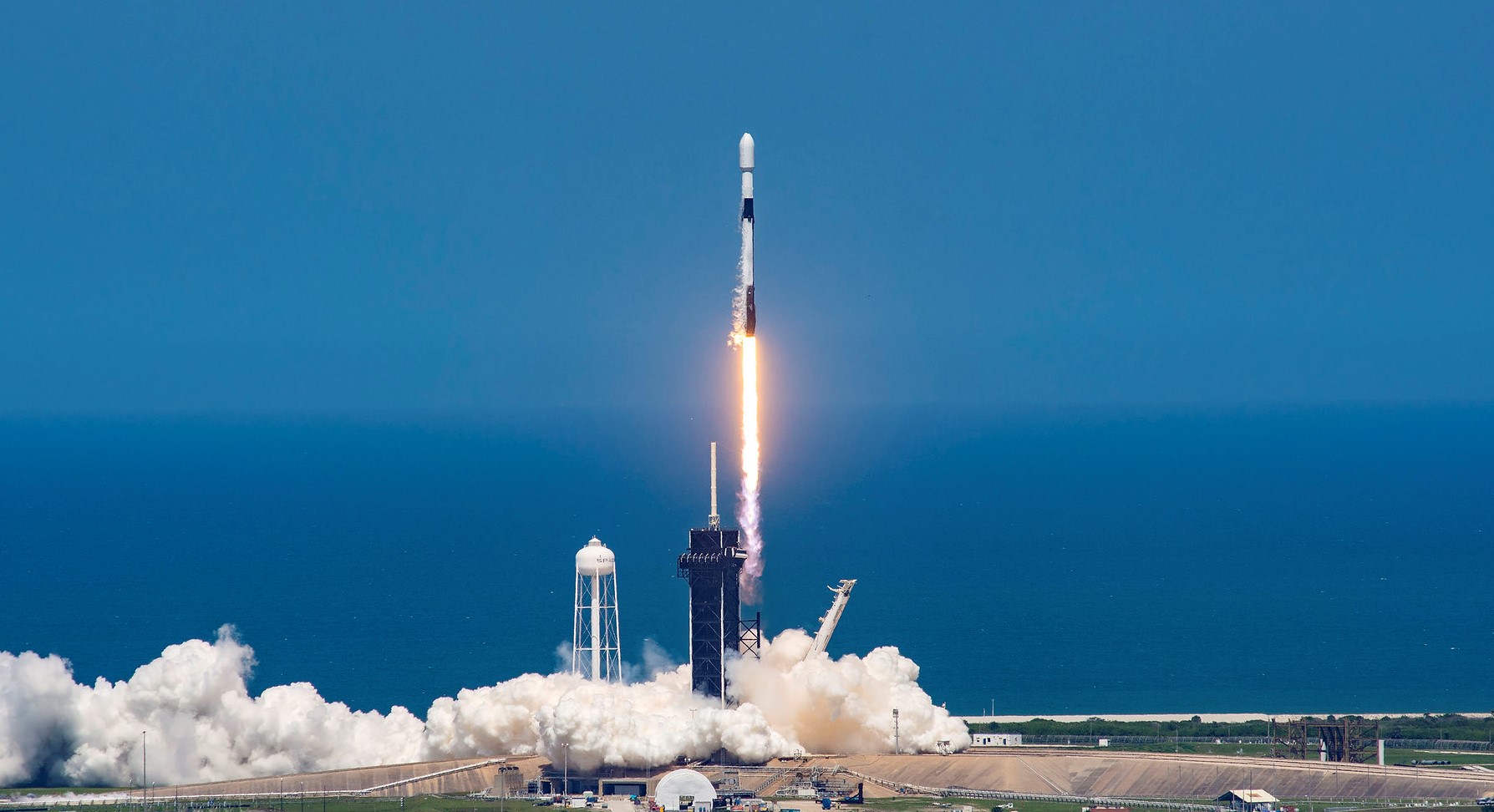
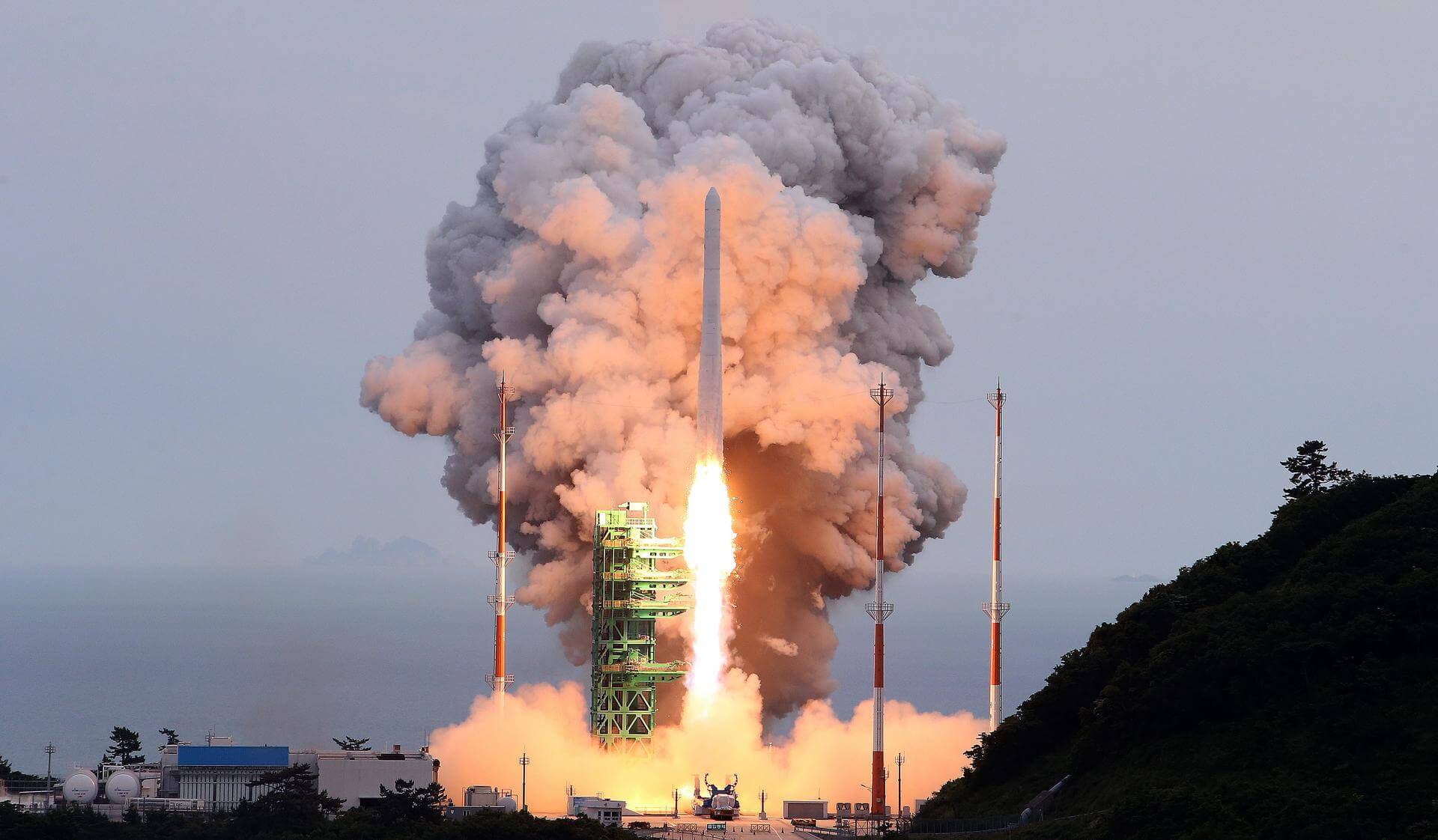
NeonSat-2 to 6
Nuri
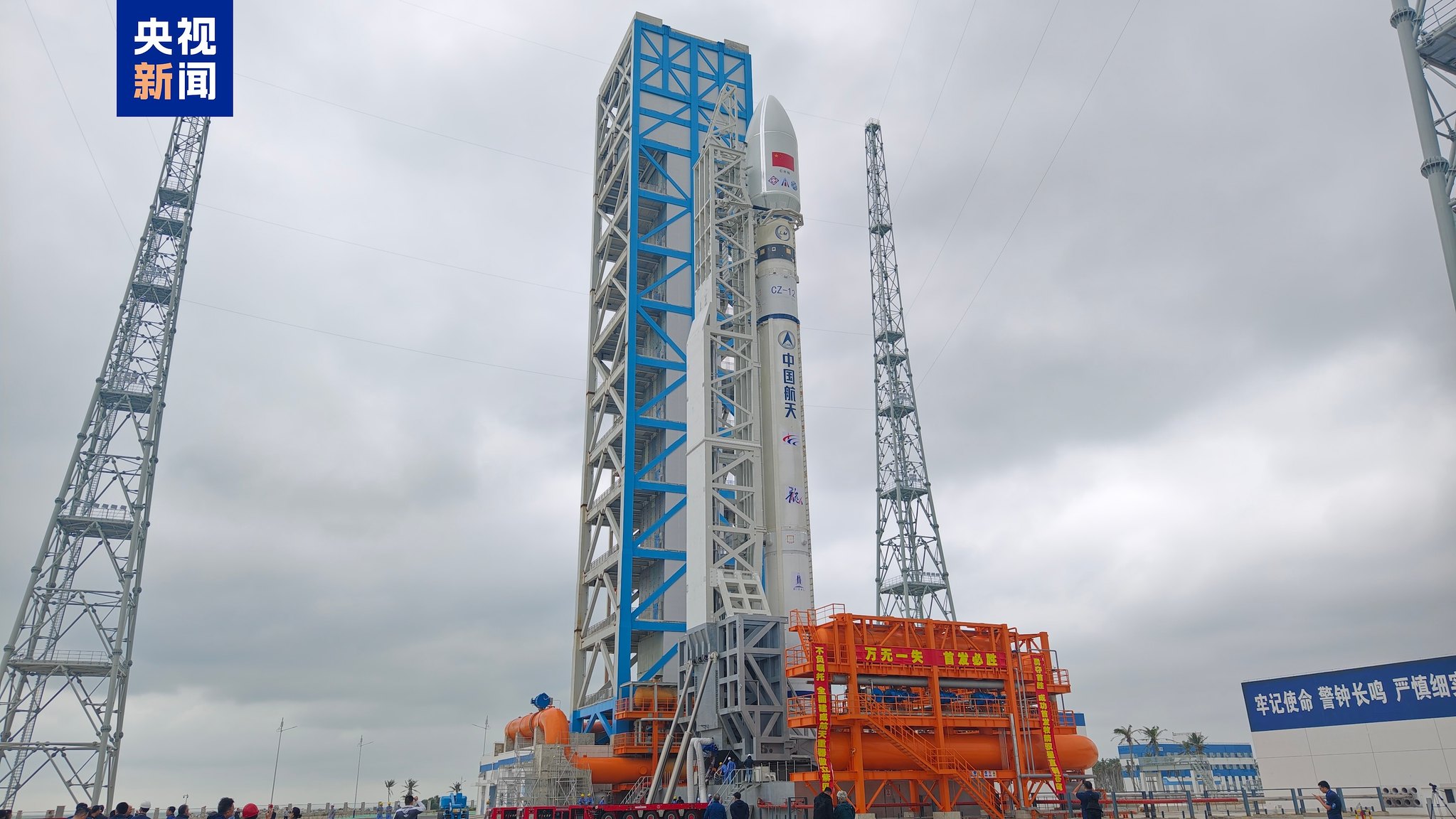
Unknown Payload
Long March 12

Starlink Group 15-25
Falcon 9 Block 5
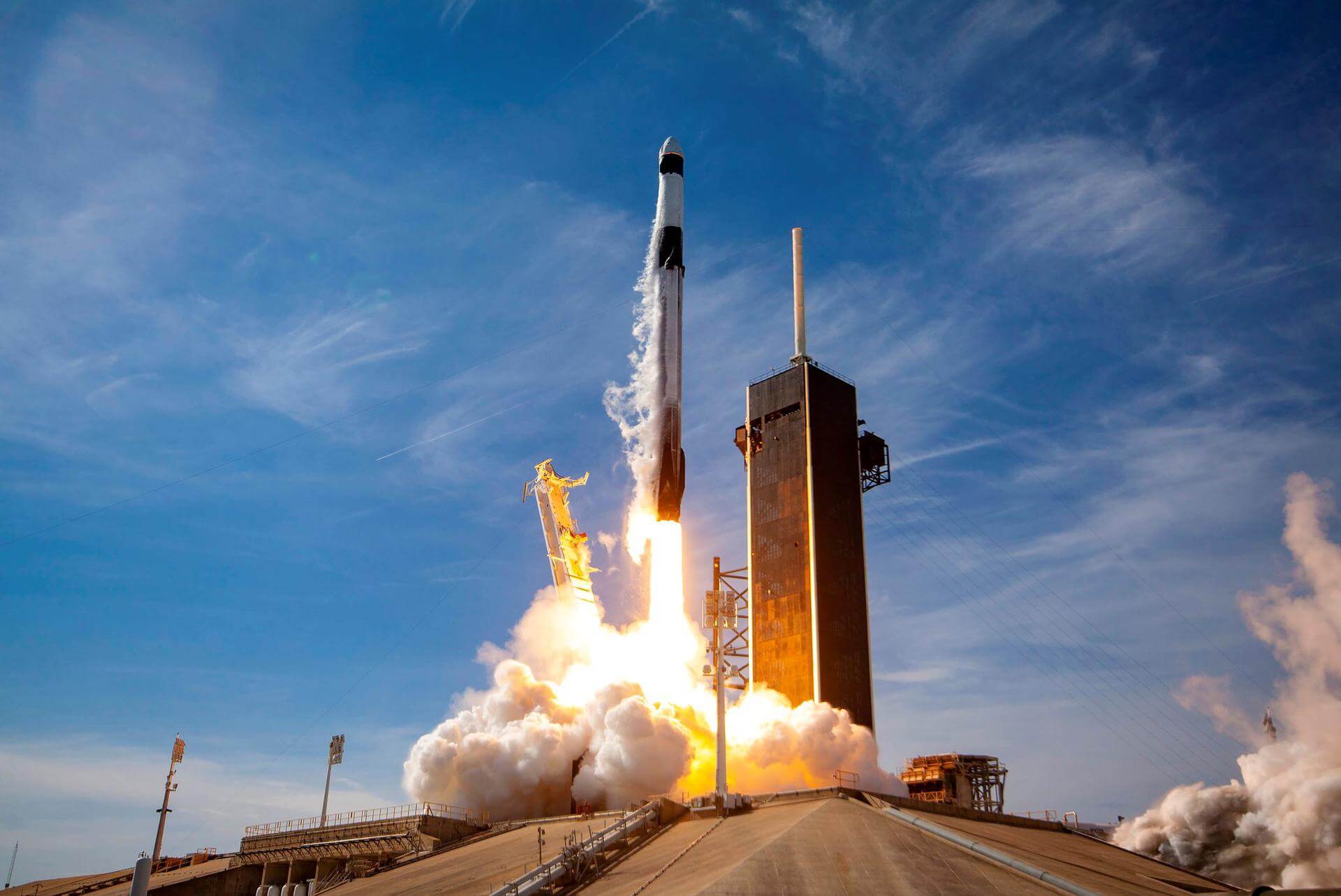
Dragon CRS-2 SpX-35
Falcon 9 Block 5
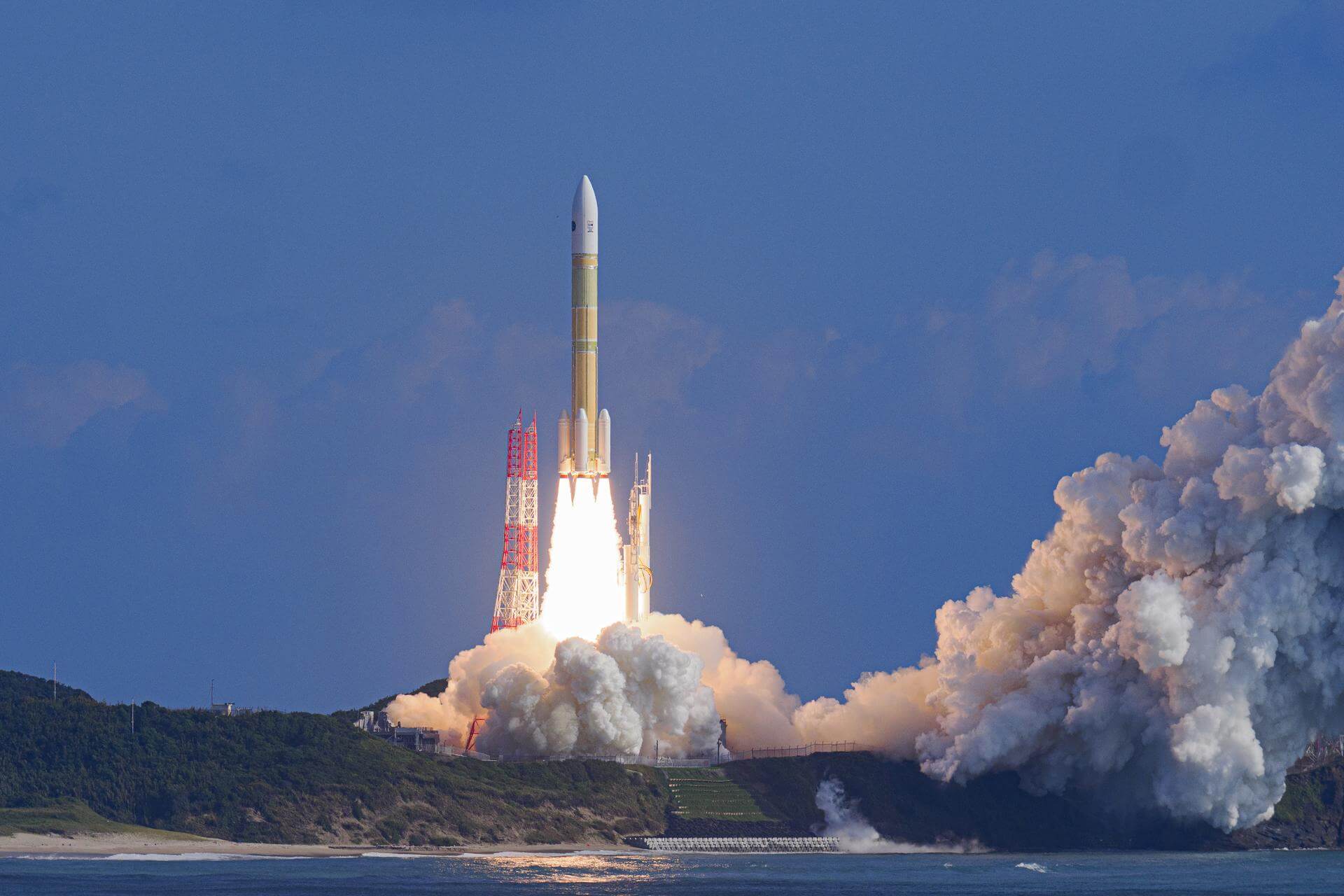
Martian Moon eXplorer (MMX)
H3-24
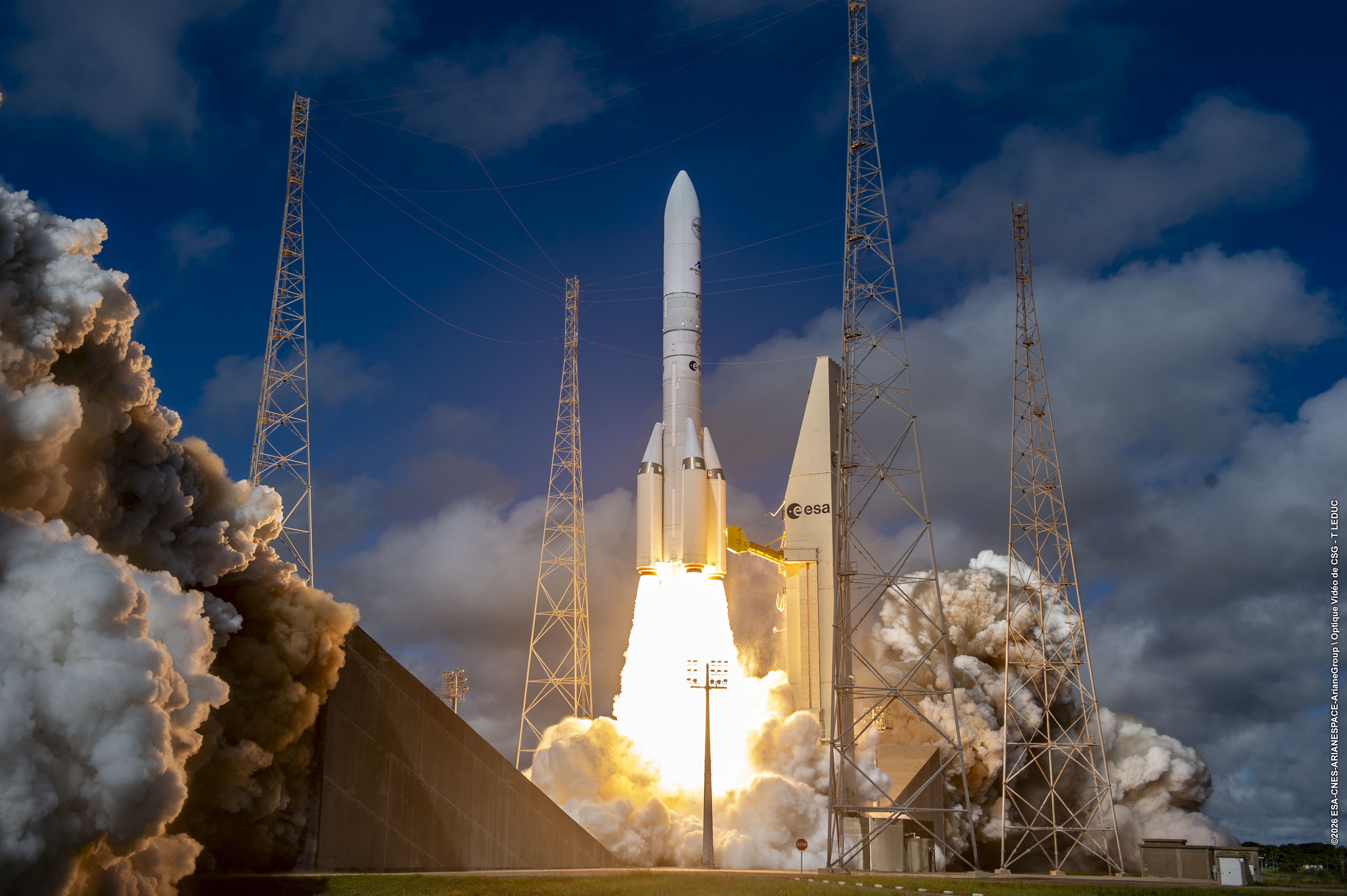
Amazon Leo (LE-04)
Ariane 64 Block 2
Artemis II
Humanity's return to the Moon · Orion "Integrity" · Safe splashdown in the Pacific
After 10 extraordinary days in space, the Artemis II crew safely returned to Earth on April 10, 2026, splashing down in the Pacific Ocean off the coast of San Diego. They traveled farther from Earth than any humans in history, completed a lunar flyby within 80 miles of the Moon's surface, and set new records that will echo for generations.
10 Days
Mission Duration
Planned
4,067 mi
Distance to Moon
Closest approach
252,756 mi
Max Distance
Record-breaking
SLS Block 1
Launch Vehicle
8.8M lbs thrust
Historic Firsts & Records
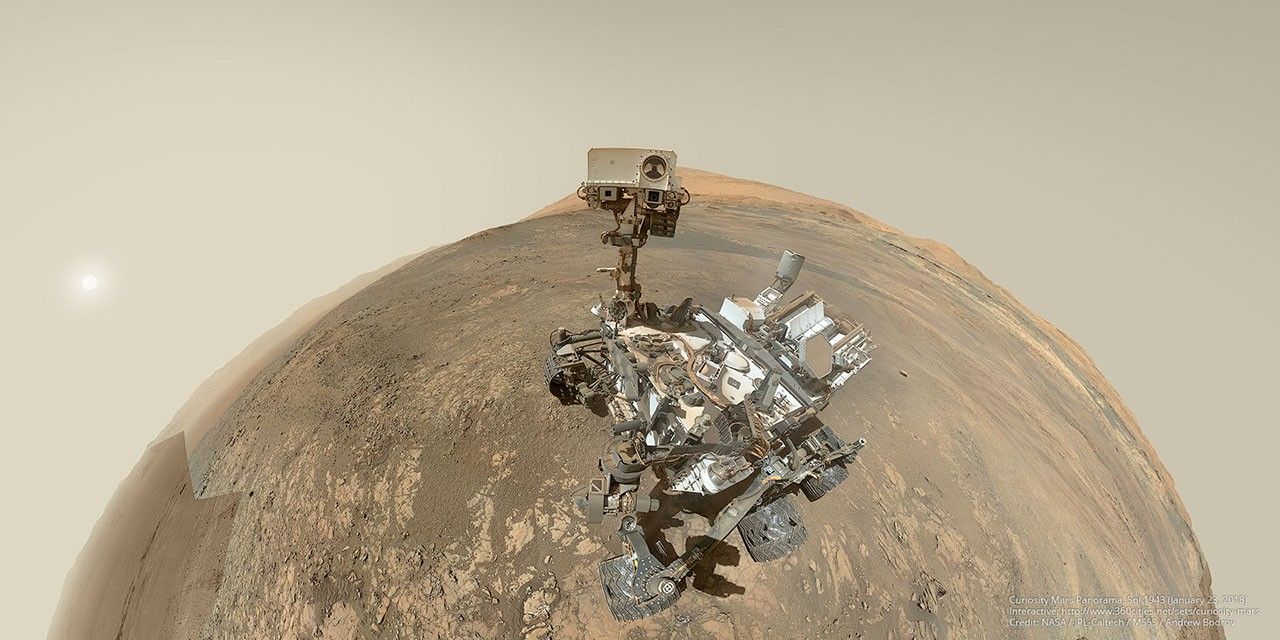
APOD: 2026 October 3 – Selfie at Vera Rubin Ridge
APOD Science APOD APOD: 2026 October 3 –… Today’s APOD Archive Submissions Index Search Calendar RSS Education About Discuss APOD Astronomy Picture of the Day Discover the cosmos! Each day a different image or photograph of our fascinating universe is featured, along with a brief explanation written by a professional astronomer. Selfie at Vera […]
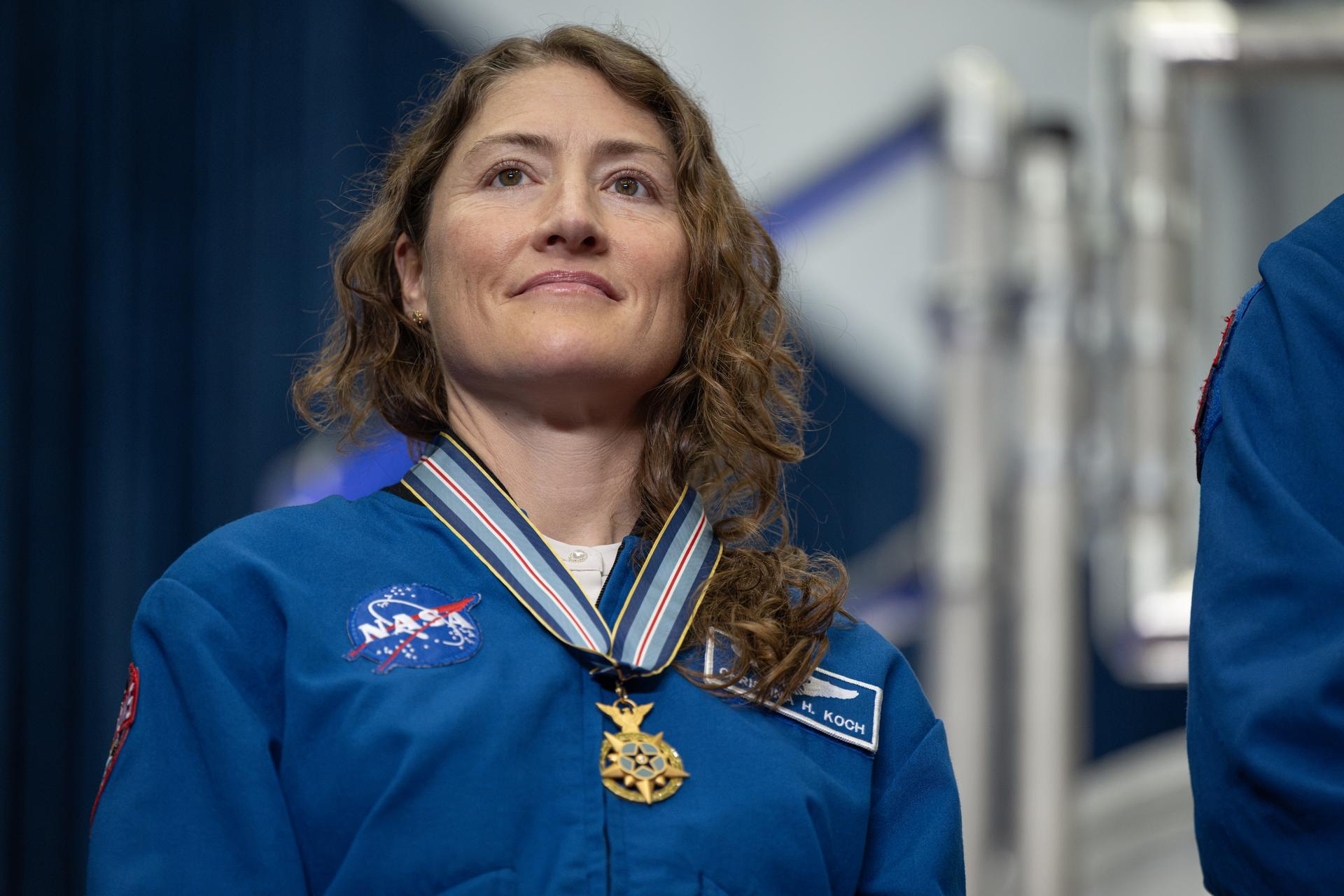
NASA Astronaut Christina Koch to Join NFL Fans in Philadelphia
As part of NASA’s ongoing Inspiration Tour, NASA astronaut Christina Koch will highlight America’s strengths in space exploration and aeronautics innovation at the Philadelphia Eagles vs. Los Angeles Rams game in Philadelphia on Sunday, Oct. 4. A self-proclaimed Philadelphia sports fan, Koch is an explorer and engineer who spent a total of 338 days in […]

Heading Home: NASA’s SpaceX Crew-12 Concludes Station Science Mission
NASA’s SpaceX Crew-12 mission is ending, with the crew scheduled to return in early October. NASA astronauts Jessica Meir and Jack Hathaway, ESA (European Space Agency) astronaut Sophie Adenot, and Roscosmos cosmonaut Andrey Fedyaev will head home from the International Space Station after supporting research that benefits life on Earth and prepares humans for missions […]
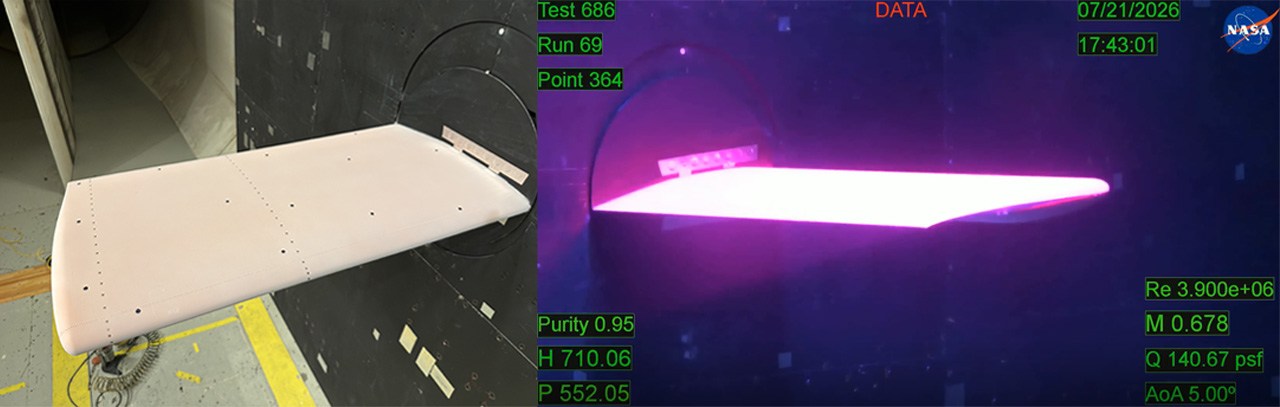
NASA Model Wing Lights Up During First Pressure Sensitive Paint Tests
Groundbreaking tests at NASA’s Langley Research Center in Hampton, Virginia, are paving the way for new wind tunnel capabilities for designing the aircraft technologies of the future.  In a first-of-its-kind test in NASA Langley’s Transonic Dynamics Tunnel, researchers used unsteady Pressure Sensitive Paint to study how air flows around a standard wind tunnel model known […]
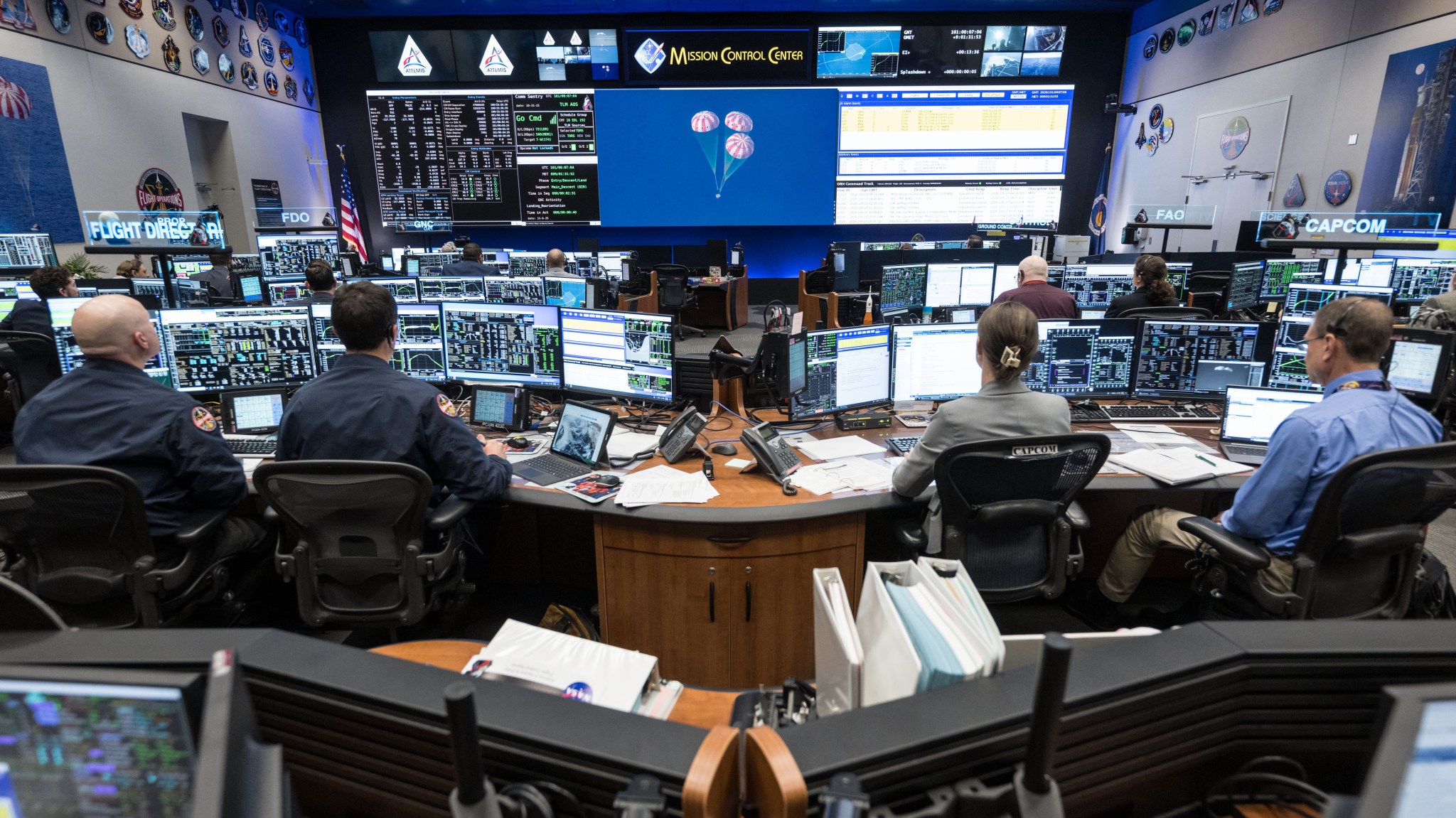
La NASA abre solicitudes para próxima promoción de directores de vuelo
Lee esta nota de prensa en inglés aquí. La NASA busca líderes para uno de los puestos más prestigiosos de la Tierra en el ámbito de los vuelos espaciales tripulados: director de vuelo en el control de misión del Centro Espacial Johnson de la agencia, en Houston. Esta función es fundamental para reforzar el liderazgo […]

Total solar eclipse 2026 (Official ESA broadcast)
Video: 01:10:42 We broadcast live from the Observatorio Astrofísico de Javalambre in Spain as a total solar eclipse crossed Europe on 12 August 2026. The path of totality swept across Greenland, Iceland, Spain and a small area of northeastern Portugal, while much of Europe experienced a partial eclipse. A total solar eclipse occurs when the Moon passes directly between Earth and the Sun, completely blocking the face of the Sun. The Observatorio Astrofísico de Javalambre
A New Framework for Modeling Solar Flares from MHD to Kinetic Processes
Joel C. Allred, Graham S. Kerr, Silvina E. Guidoni, Joel T. Dahlin, Marc Swisdak, Judith T. Karpen, Valeriy Tenishev
Physical processes in solar flares span many orders of magnitude in spatiotemporal scales, so a single unified model accounting for all relevant processes remains computationally intractable. Instead, specialized codes have been developed, targeting specific domains that tackle specific aspects of the solar flare problem. Here, we present a comprehensive framework that links three models to capture flare initiation and energy release, the subsequent particle acceleration, the propagation and thermalization of those particles, and ultimately the heating of the lower solar atmosphere. We use the 2.5D ARMS magnetohydrodynamics (MHD) code to model stressing of the magnetic field in a simulated active region, the formation of a current sheet, magnetic reconnection, and the evolution of newly formed flare loops. We use the conditions in the ARMS' current sheet to initialize the kglobal model, which predicts time-dependent nonthermal electron and proton distributions. Finally, we use RADYN+FP to inject these distributions into a newly reconnected ARMS loop and compute subsequent particle transport, atmospheric heating, and radiative emissions. This is the first detailed presentation of a RADYN+FP simulation tracking nonthermal electrons and protons in the same loop. As well as discussing the interesting physics that takes place, we note how this results in white-light flare emission height consistent with observations. This work is a first step toward building a fully 3D flare modeling framework.
Strongly mixed cosmological collider at unequal sound speeds
Javier Huenupi, Gonzalo A. Palma, Spyros Sypsas
We derive the canonically normalized modes of a two-field inflationary system with arbitrary constant quadratic mixing and unequal sound speeds $c_\varphi$ and $c_σ$ for the curvature and isocurvature perturbations, respectively. A Laplace representation reduces the coupled dynamics to a second-order Heun equation and gives the exact late-time curvature power spectrum for arbitrary values of the mixing parameter and entropy mass. The sound-speed ratio $r_c=c_σ/c_\varphi$ controls the separation between the two sound horizons. At fixed nonzero mixing and $r_c\ll1$, the power exhibits power-law enhancement, growth as $\ln^2(1/r_c)$, or bounded oscillations in $\ln r_c$, depending on the mass and mixing. For $r_c\gg1$, the correction to the unmixed spectrum vanishes as $\ln r_c/r_c^2$ at fixed mass and mixing. Using the same normalized modes, we compute the tree-level bispectrum for three representative cubic interactions, with the mixing parameter treated exactly. For heavy entropy fields, unequal speeds modify the collider amplitude and phase while preserving the strict squeezed frequency set by the final entropy mass. The power-normalized amplitude can vary nonmonotonically with $r_c$, and a sound-speed hierarchy can delay the approach to this asymptotic regime.
Non-Gaussian Parameter Bias: Formalism and Validation
Nikolina Šarčević, Matthijs van der Wild, Elena Sellentin
We present a framework for propagating systematic data mismatches into parameter biases and posterior deformations beyond the Gaussian Fisher approximation. Using the Derivative Approximation for Likelihoods (DALI), we derive analytic expressions for the maximum a posteriori (MAP) point and posterior mean, including a semi-analytic response expansion in systematic amplitude. We validate the framework against direct numerical calculations and Markov Chain Monte Carlo (MCMC) sampling in a controlled nonlinear two-parameter benchmark up to a covariance-weighted data-space mismatch of $d_{data}=5$. At $d_{data}=5$, Fisher predicts the wrong direction of the shift in one parameter and differs from the numerical result by a Fisher-metric distance of 23.1, whereas the analytic DALI MAP prediction remains within 0.091, with componentwise errors of 0.04% and 0.46%. The response expansion reproduces the posterior mean with errors of 0.02% and 0.18%, while the DALI posterior closely reproduces the displacement and deformation of the fully sampled nonlinear posterior. Mismatches of equal significance but different directions produce markedly different parameter shifts and posterior deformations, while multiple additive mismatches can produce nonadditive parameter responses through nonlinear inference. By reconstructing the posterior under systematic mismatch, the framework captures the nonlinear response and non-Gaussian geometry of parameter bias: how mismatches move and reshape the posterior, why their direction matters, and how their combined effects can be dissected to understand the interplay between multiple systematics.

NASA Science
🌟 Did you know? The Curiosity rover is basically a master of the perfect selfie, having snapped this stunning panoramic view of Mars by stitching together 61 individual photos! Because a Martian "sol" is about 40 minutes longer than an Earth day, our robotic friend has been keeping a slightly different schedule while exploring the Red Planet. **Mind-blowing fact:** Even though Curiosity is the size of a small car, it has successfully climbed over one kilometer in elevation while trekking up the slopes of Mount Sharp!
NASA Science
🌟 Did you know that the stunning image you’re seeing is actually a cosmic collection of 313 different nebulas? Astrophotographer Bing Xin spent a mind-blowing 800 hours under the dark skies of China and Mongolia to capture every detail of this massive Sharpless Catalog. It’s truly incredible to realize that in this single composite, you are looking at everything from the birthplaces of stars to the glowing remains of exploded ones!
Featured Posts
In-depth articles and mission trackers


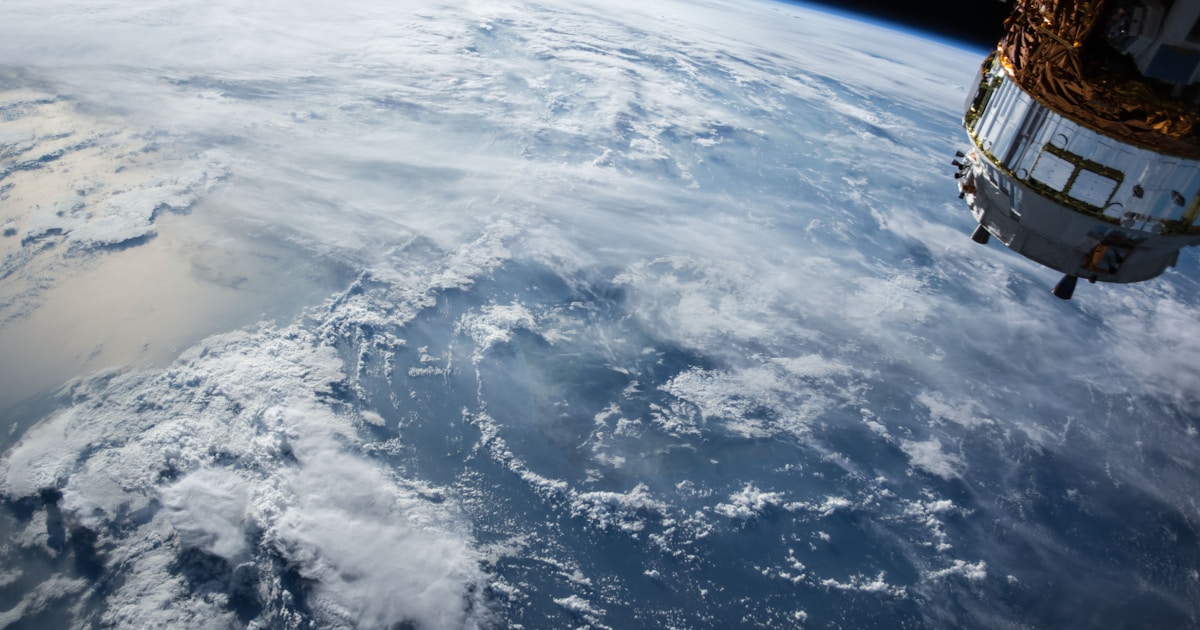
Interactive Globe
Track satellites and debris in real-time 3D
Academy
Master astrophysics with structured courses
Paper Discovery
Search arXiv and NASA ADS with AI explanations
Citizen Science
Contribute to real research projects